Greek seminars
Led by Miguel Ángel Acosta Albarracín
1. Logistics & Schedule
Instruction Language: Ancient Greek
Day & Time: Tuesdays & Thursdays, 14:00–15:30 EDT / 20:00–21:30 CET/CEST.
Course Duration:
Start Date: June 23, 2026
End Date: September 10, 2026
Lesson Structure:
Duration: 90 minutes per session
Total Instructional Hours: 36 hours total (based on a 12-week schedule)
2. Course Overview
Abstract: This twelve-week seminar offers a rigorous immersion into the foundations of ancient eloquence. By pairing the timeless narratives of Aesop’s Fables with the Progymnasmata—the classical sequence of rhetorical exercises—students will transition from textual analysis to active stylistic mastery. Each session interrogates a single fable through both adapted and original Greek versions, culminating in structured composition and oral activities modeled after the seminal handbooks of Aelius Theon, Aphthonius, and Hermogenes.
Comprehensive Description: The course is meticulously structured around eighteen fables, analyzed at a rate of one per 90-minute session. Each class is bifurcated into two integrated phases. The first phase focuses on lexical acquisition and immersion; the text is read aloud and dissected through comprehension questions to internalize key vocabulary. The second phase challenges the student to bridge the gap between comprehension and creation. Students will compare the original Greek with its adaptation before engaging in a rotating exercise (ἄσκησις) drawn from the Progymnasmata.
The Rhetorical Sequence: These exercises follow the authentic pedagogical path of antiquity: σύντμησις (abbreviation), αὔξησις (amplification through direct dialogue), παράφρασις (close paraphrase), διήγημα (narrative retelling), ἠθοποιΐα (character impersonation), ἔκφρασις (vivid description), and χρεία (expansion of the moral). Rather than modern inventions, these represent the exact curriculum ancient students navigated to master the fable (μῦθος)—the essential gateway to all classical rhetoric. The seminar concludes with a final capstone analysis of a reserve fable (λύκος καὶ γραῦς).
3. Proficiency & Requirements
Language Level:
Framework Reference: Designed for students who have completed Athenaze (Italian Edition) Vol. I or an equivalent curriculum.
General Description: Upper-intermediate. Students should be able to read simple Greek prose with support and possess familiarity with core morphology, participial constructions, and narrative syntax.
Estimated Self-Study Time:
Time Commitment: 1.5 hours per week.
Preparation Type: Texts are encountered and analyzed in class; therefore, no prior preparation of the fable is required. Review of previous sessions is recommended to reinforce active composition skills.
4. Materials & Bibliography
Required Textbooks:
Primary Text:Corpus fabularum Aesopicarum, vols. 1.1 & 1.2, 2nd ed. Ed. Hausrath, A., Hunger, H. (Leipzig: Teubner).
Further Reading:
George A. Kennedy, Progymnasmata: Greek Textbooks of Prose Composition and Rhetoric (SBL, 2003).
Ronald F. Hock and Edward N. O'Neil, The Chreia in Ancient Rhetoric (Vols. I & II).
Malcolm Heath, “Theon and the History of the Progymnasmata,” GRBS 43.
Gideon O. Burton, Silva Rhetoricae, rhetoric.byu.edu.

Led by Lelio Paolo Panzone
1. Logistics & Schedule
Instruction Language: Ancient Greek
Day & Time: Mondays, 12:00–13:30 EDT / 18:00–19:30 (CET/CEST).
Course Duration:
Start Date: July 27, 2026
End Date: September 28, 2026
Lesson Structure:
Duration: 90 minutes per session
Total Instructional Hours: 15 hours total
2. Course Overview
Abstract: This seminar offers a comprehensive reading of Plato’s Apology of Socrates in the original Greek, focusing on its structural integrity, thematic depth, and the ethical interrogations raised by Socrates’ defense.
Comprehensive Description: Leveraging the prose of one of Antiquity’s most brilliant stylists, this course aims to refine students’ philological mastery while exploring complex theoretical questions. The seminar is conducted entirely in Ancient Greek (immersion method). Participants are expected to engage with the text beforehand to facilitate in-class discussions on interpretive guidelines and noteworthy passages. To ensure a nuanced understanding of Socratic thought, the instructor will introduce supplemental texts from Plato and contemporary authors, alongside targeted vocabulary exercises designed to internalize Attic forensic and philosophical terminology.
Course Units:
Unit I: The figure of Socrates and the Athenian judicial system (Excerpts from Diogenes Laertius).
Unit II: The exordium (prooimion) and proposition (prothesis) (17a1–19a7).
Unit III & IV: Refutation (lysis) of the "old accusers": Negative and positive components (19a8–24b2).
Unit V: Refutation (lysis) of the "new accusers" (24b3–28b2).
Unit VI & VII: The digressions (parekbaseis): Addressing objections (28b3–34b5).
Unit VIII: The peroration (epilogos) (34b6–35d8).
Unit IX & X: The second and third speeches: Verdict and final reflections (35e1–42a5).
3. Proficiency & Requirements
Language Level:
Framework Reference: Designed for students who have completed Athenaze Vol. II or possess an equivalent command of Attic prose.
General Description: Advanced level. Students must be capable of navigating complex syntactic structures, summarizing content, and maintaining a conversation in Ancient Greek within a fully immersive environment.
Estimated Self-Study Time:
Time Commitment: 3–4 hours per week.
Preparation Type: Critical reading of the assigned Greek text is mandatory prior to each session to ensure active participation in the seminar's dialectic.
4. Materials & Bibliography
Required Textbooks:
Primary Text: Platonis Opera, ed. J. Burnet, Vol. 1 (Oxford University Press).
Disclaimer: The acquisition of the physical or digital editions of the required textbooks is mandatory for course participation. Please ensure materials are secured prior to the first session.
Selected Further Reading:
T.C. Brickhouse & N.D. Smith, Plato’s Socrates (Oxford, 1994).
E. de Strycker & S.R. Slings, Plato’s Apology of Socrates: A Literary and Philosophical Study (Leiden, 1994).
G. Vlastos, Socrates, Ironist and Moral Philosopher (Cambridge, 1991).
Led by Joanna Thornhill
1. Logistics & Schedule
Instruction Language: Ancient Greek
Day & Time: Mondays, 13:00–14:30 EDT / 19:00–20:30 (CET/CEST).
Course Duration:
Start Date: June 29
End Date: August 31
Lesson Structure:
Duration: 90 minutes per session
Total Instructional Hours: 15 hours total
2. Course Overview
Abstract: This seminar offers a philological and philosophical examination of the Ancient Greek concept of philia through the close reading of primary texts by Plato and Aristotle.
Comprehensive Description: Students will analyze and compare pivotal passages from Plato and Aristotle concerning the nature, scope, and purpose of friendship. The course addresses fundamental questions: Is philia inherently reciprocal, or can it exist unilaterally? Are the eudaimones—those who have achieved self-sufficiency—in need of friends, or does their virtue preclude such a requirement? By engaging with these works in the original Ancient Greek, participants will refine their command of philosophical vocabulary and prose style. Furthermore, the course aims to develop the student’s ability to navigate complex grammatical structures and idiomatic expressions while engaging in rigorous philosophical inquiry.
3. Proficiency & Requirements
Language Level:
Framework Reference: Designed for students who have completed the first volume of Athenaze or have attained an equivalent level of proficiency.
General Description: Open to intermediate and advanced students of Ancient Greek who are proficient in reading simple prose and capable of participating in discussions conducted in the target language.
Estimated Self-Study Time:
Time Commitment: Students should expect to devote 2–4 hours per week to independent study to ensure adequate preparation for each session.
Preparation Type: Participants are required to translate and analyze the assigned texts prior to each class, arriving prepared to discuss philological nuances and philosophical implications.
4. Materials & Bibliography
Required Textbooks:
Primary Texts: Aristotle’s Nicomachean Ethics; Plato’s Lysis.
Disclaimer: The acquisition of the physical or digital editions of the required textbooks is mandatory for course participation. Please ensure materials are secured prior to the first session.
Further Reading:
For historical contextualization: G.W.F. Hegel, Lectures on the History of Philosophy, Part One, Section One, Chapter III: “The Philosophy of Plato” and “The Philosophy of Aristotle.”
Secondary Literature: John von Heyking, “Hermes as Eros in Plato’s Lysis”; Mavis Biss, “Aristotle on Friendship and Self-Knowledge: The Friend Beyond the Mirror.”
Led by Rogelio Toledo
1. Logistics & Schedule
Instruction Language: Ancient Greek
Day & Time: Saturdays, 12:00–13:30 EDT / 18:00–19:30 CET/CEST.
Course Duration:
Start Date: June 13
End Date: July 11
Lesson Structure:
Duration: 90 minutes per session
Total Instructional Hours: 7.5 hours total (5 sessions)
2. Course Overview
Abstract: This course provides a technical introduction to the three fundamental meters of Ancient Greek poetry—iambic verse, hexameter, and anapest—through the analysis of both classical pagan and early Christian authors.
Comprehensive Description: Participants will explore the foundational vocabulary and concepts of Greek prosody by engaging with primary grammatical and metrical authorities, including Dionysius Thrax, Dionysius of Halicarnassus, Hephaistion, John Tzetzes, and George Choeroboscus. Students will apply these theoretical frameworks to a diverse range of poetic texts from Anacreon, Homer, and Aeschylus to Gregory of Nazianzus, Nonnus of Panopolis, and Clement of Alexandria. The curriculum includes regular scansion exercises and emphasizes the oral performance of verse to internalize rhythmic structures. Additionally, the course will examine the historical shift toward stress-based metrics as discussed by Maximus Planudes.
Course Units:
Unit 1: Foundations of Greek Prosody. Definitions of grammar (ἐμπειρία and τέχνη) in literary study; measuring vowel quantity; the concept of the metrical foot (πούς) and the mechanics of accentuation.
Unit 2: Iambic Meter and Introduction to Anapests. Scansion and melodic performance of iambic verse and anapestic systems; analysis of the Agamemnon (parodos) and Clement of Alexandria.
Unit 3: Anapests and Introduction to Hexameter. Advanced discussion of anapestic structures and the transition to epic dactylic hexameter.
Unit 4: Hexameter and Byzantine Prosody. Homeric recitation following the reconstructions of Stefan Hagel and M.L. West, alongside an investigation into Byzantine modal traditions and stress-based poetry.
3. Proficiency & Requirements
Language Level:
Framework Reference: Designed for students who have completed Athenaze Vol. I and are currently studying Vol. II (or equivalent).
General Description: Intermediate. Participants should be capable of auditory comprehension in Ancient Greek and able to explain grammatical or metrical passages in the target language within an immersive context.
Estimated Self-Study Time:
Time Commitment: 1–2 hours per week.
Preparation Type: Students are expected to complete a preliminary reading of the assigned texts and prepare scansion exercises prior to each session.
4. Materials & Bibliography
Required Materials: All primary reading selections will be provided by the instructor at least one week in advance.
Primary Bibliography:
M. Consbruch, Hephaestionis enchiridion cum commentariis veteribus (Teubner).
Nonnus, Paraphrasis sancti evangelii Joannei, ed. Scheindler (Teubner).
C. Matray and C. Mondésert, Clément d'Alexandrie: Le pédagogue, Vol. 3 (Sources Chrétiennes).
J.-P. Migne, Patrologiae cursus completus (series Graeca) (MPG) 37.
M.L. West, Carmina Anacreontea (Teubner).
L. Radermacher and H. Usener, Dionysii Halicarnasei quae exstant, Vol. 6 (Teubner).
Secondary Bibliography:
M.L. West, "The Singing of Homer and the Modes of Early Greek Music," JHS 101.
G. Danek and S. Hagel, Homerische Vortragstechnik: Rekonstruktion und modernes Publikum.
Led by Rogelio Toledo
1. Logistics & Schedule
Instruction Language: Ancient Greek
Day & Time: Saturdays, 10:00–11:00 EDT / 16:00–17:00 CET/CEST.
Course Duration:
Start Date: September 5, 2026
End Date: November 7, 2026
Lesson Structure:
Duration: 60 minutes per session
Total Instructional Hours: 10 hours total
2. Course Overview
Abstract: This immersive seminar focuses on the communicative acquisition of everyday vocabulary to solidify a functional command of basic and intermediate Ancient Greek grammar.
Comprehensive Description: Each session is dedicated to the interrogation of distinct semantic fields. Vocabulary is introduced through visual elicitation and contextual definitions, bypassing translation to foster direct association. Participants will engage in active dialogue, collaborative problem-solving, and interactive games designed to simulate authentic communication. To bridge the gap between spoken and literary Greek, each session concludes with the analysis of a brief original text related to the day's theme.
Course Units:
Diet & Gastronomy: Groceries, ingredients, and kitchen implements; verbs of preparation; ordering in a θερμοπολεῖον.
Daily Routines: Waking, commuting, and household management; temporal adverbs and frequency expressions.
Domestic Spaces: Interior architecture and furnishings; discussing household maintenance and neighborhood dynamics.
Commerce & Attire: Textiles, garments, and sizing; the language of the marketplace, pricing, and transactions.
Health & Physicality: Anatomy, symptomatology, and pharmacological needs; navigating a medical consultation.
Navigation & Transit: Directing movement and route planning; vocabulary of travel and public infrastructure.
Meteorology & Chronology: Weather phenomena and the rhythm of the seasons; seasonal activities and agricultural cycles.
Professional & Academic Life: Occupations, institutional tasks, and university schedules.
Leisure & Social Interaction: Hobbies, athletics, and the arts; formal invitations and the etiquette of declining.
Interpersonal Dynamics: Family, friendship, and kinship; describing personality traits and navigating social requests.
3. Proficiency & Requirements
Language Level:
Framework Reference: Designed for students who have attained active mastery of Athenaze Vol. I or an equivalent curriculum.
General Description: Intermediate. Intended for participants who can comprehend spoken Greek and provide basic explanations of difficult passages using the target language.
Estimated Self-Study Time:
Time Commitment: 30 minutes to 1 hour per week.
Preparation Type: Students are expected to review the lexical sets and idiomatic phrases from previous sessions and complete brief reading assignments to prepare for in-class discussion.
4. Materials & Bibliography
Required Materials: All primary instructional materials will be provided by the instructor.
Further Reading:
Eleanor Dickey, The Colloquia of the Hermeneumata Pseudodositheana (Cambridge, 2012).
Adrian Hundhausen, Ὁ Φάρος: A Thematic Guide to Ancient Greek Vocabulary and Set Phrases (Argos Press, 2024).
P. Guisard & C. Laizé, Lexique Nouveau de La Langue Grecque (Ellipses, 2006).
F. Henshaw & M. Hawkins, Common Ground: Second Language Acquisition Theory Goes to the Classroom (Hackett, 2022).
Led by Miguel Ángel Acosta Albarracín
1. Logistics & Schedule
Instruction Language: Ancient Greek
Day & Time: Mondays & Wednesdays, 14:00–15:30 EDT / 20:00–21:30 CET/CEST.
Course Duration:
Start Date: June 22, 2026
End Date: September 9, 2026
Lesson Structure:
Duration: 90 minutes per session
Total Instructional Hours: 48 hours total
2. Course Overview
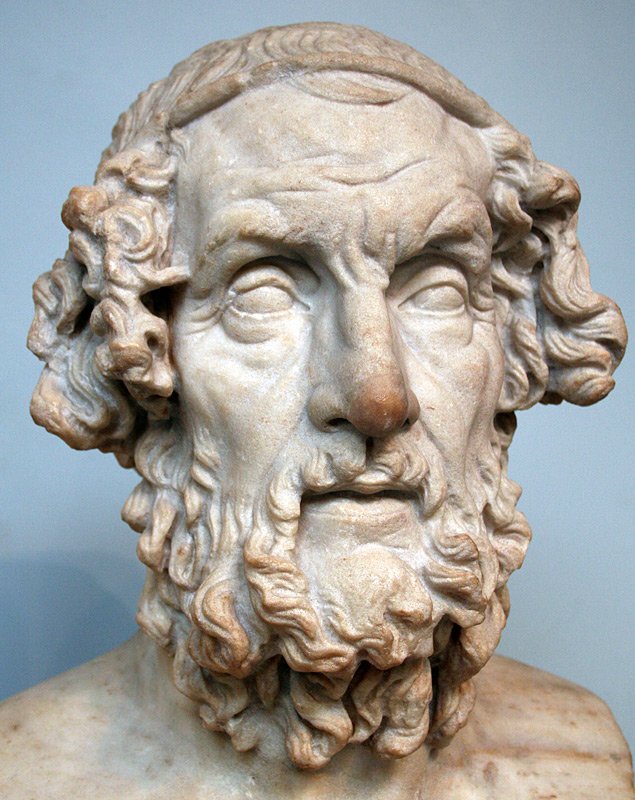
Abstract: This twelve-week immersion seminar offers a critical and sustained exploration of the Vita Herodotea (Ὁμήρου βίος). Through a methodology of oral performance, immediate paraphrase, and guided dialectic conducted entirely in Ancient Greek, students will achieve fluent, unassisted comprehension of extended archaic prose and embedded dactylic hexameter.
Comprehensive Description: The course adopts a rigorous immersion approach, where all instruction and interaction occur in Ancient Greek. Sessions prioritize direct engagement with the text, emphasizing the internalized rhythm of oral performance and the agility of immediate linguistic reformulation. Rather than abstract grammatical analysis, the curriculum focuses on the inductive mastery of the text’s underlying structures—recurrent participial chains, narrative formulas, and the nuances of the Homeric dialect. Vocabulary acquisition is organized by semantic fields—including travel, craft, ritual, and poetic production—and reinforced through cumulative exposure across the narrative arc.
Curriculum Phases:
Phases I–V (Weeks 1–10): A sequential investigation of the text, tracing the birth and education of Homer in Smyrna and Cyme (§§ 1–8), his early compositions at Neon Teichos (§§ 9–16), his wanderings through Chios (§§ 17–24), the establishment of his school (§§ 25–28), and his travels through Samos (§§ 29–32).
Phase VI (Weeks 11–12): Dedicated to continuous rereading and synthesis. Students will consolidate the corpus of embedded poems and complete an uninterrupted reading of the entire thirty-eight sections to master the work's historical and philological unity.
3. Proficiency & Requirements
Language Level:
Framework Reference: Designed for students who have successfully completed Athenaze Vol. II or an equivalent introductory sequence.
General Description: Upper-intermediate to advanced. Participants should be prepared to transition from controlled textbook readings to sustained engagement with authentic archaic prose and early hexameter verse within a fully immersive environment.
Estimated Self-Study Time:
Time Commitment: 1.5 hours per week.
Preparation Type: Students are expected to reread assigned sections and consolidate vocabulary by semantic field to facilitate active participation in seminar discussions.
4. Materials & Bibliography
Required Textbooks:
Primary Text: Vitae Homeri, Vita Herodotea. In: Homeri Opera, Vol. 5. Ed. T. W. Allen (Oxford: Clarendon Press).
Further Reading:
M. L. West, ed. and trans., Homeric Hymns, Homeric Apocrypha, Lives of Homer (Loeb Classical Library, 2003).
Richard J. Cunliffe, A Lexicon of the Homeric Dialect (University of Oklahoma Press, 1963).
M. L. West, Greek Metre (Oxford: Clarendon Press, 1982).
Led by Joanna Thornhill
1. Logistics & Schedule
Instruction Language: Ancient Greek
Day & Time: Tuesdays, 13:30–15:00 EDT / 19:30–21:00 (CET/CEST).
Course Duration:
Start Date: June 30
End Date: September 1
Lesson Structure:
Duration: 90 minutes per session
Total Instructional Hours: 15 hours total
2. Course Overview
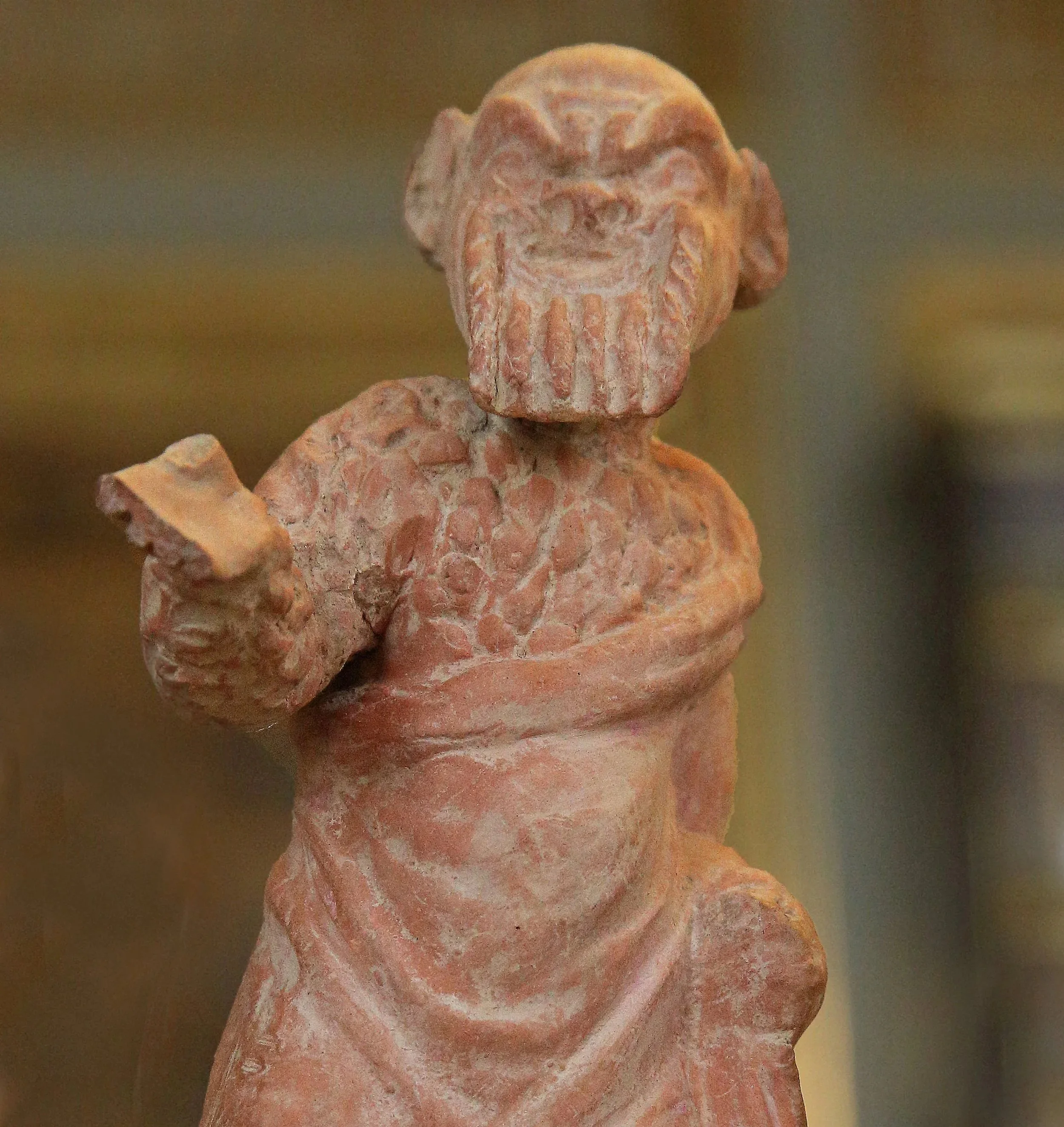
Abstract: This course provides a philological and metrical analysis of Menander’s Γνῶμαι μονόστιχοι, exploring the ethical depth and poetic structure of these foundational Ancient Greek sententiae.
Comprehensive Description: Students will examine a diverse selection from Menander’s One-Verse Maxims, a collection of pithy sayings that run the gamut from profound philosophical insights to provocative social commentary. These verses serve as a window into the ancient Athenian worldview, reflecting the cultural atmosphere of the Hellenistic period. In addition to textual interpretation, participants will master the iambic trimeter—the standard meter of Greek drama—through practice in correct recitation and the traditional art of memorization. The seminar emphasizes the intersection of linguistic precision and cultural history.
3. Proficiency & Requirements
Language Level:
Framework Reference: Designed for students who have successfully completed Chapter 7 of Athenaze or have attained a comparable foundational level in Ancient Greek.
General Description: Suitable for late-beginner to intermediate students. While active oral proficiency is not required, students should possess the reading comprehension necessary to navigate basic poetic syntax.
Estimated Self-Study Time:
Time Commitment: Students should expect to devote 1–3 hours per week to independent study to ensure adequate preparation for each session.
Preparation Type: Participants are expected to review the assigned verses before each class, focusing on translation and the identification of metrical patterns to facilitate informed discussion.
4. Materials & Bibliography
Required Textbooks:
Primary Text: Menander, Gnomai Monostichoi (Menandrou Gnōmai monostichoi).
Disclaimer: The acquisition of the physical or digital editions of the required textbooks is mandatory for course participation. Please ensure materials are secured prior to the first session.
Further Reading:
For bilingual reference and commentary: Menandri Sententiae (Edition including German and Latin translations), available via Gottwein.de.
Led by Rogelio Toledo
1. Logistics & Schedule
Instruction Language: Ancient Greek
Day & Time: Saturdays (bi-weekly), 12:00–13:30 EDT / 18:00–19:30 (CET/CEST).
Course Duration:
Start Date: September 5, 2026
End Date: January 9, 2027
Lesson Structure:
Duration: 90 minutes per session
Total Instructional Hours: 15 hours total
2. Course Overview
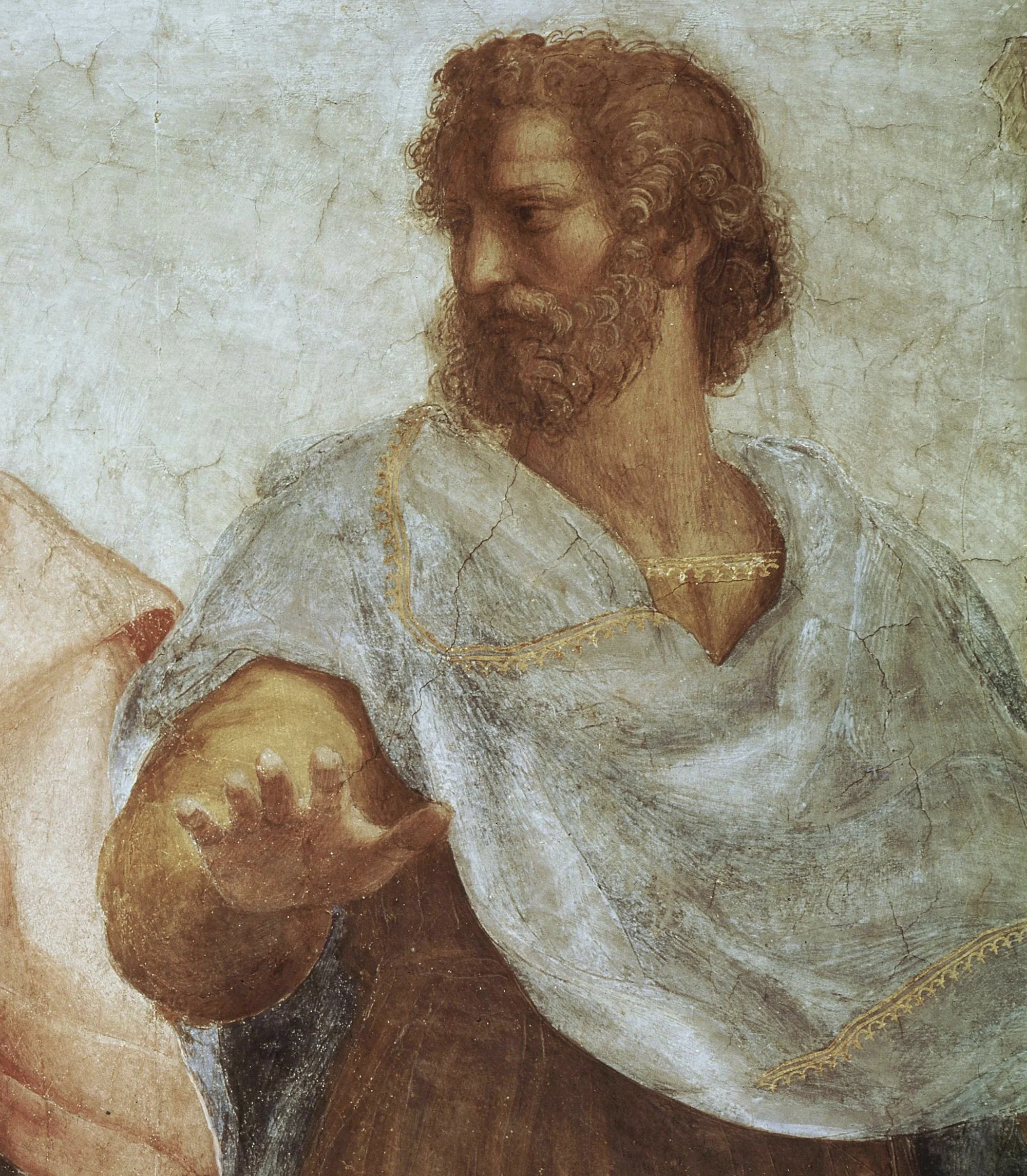
Abstract: This seminar examines Aristotle’s critical survey of early Greek speculative thought as presented in the inaugural book of the Metaphysics. Participants will trace the development of philosophy from its mythic and materialist origins to the formalization of Aristotelian causality.
Comprehensive Description: Participants will engage with Aristotelian concepts and terminology through both a philological and philosophical lens. The course involves a rigorous analysis of the apparatus criticus, comparing original fragments of Pre-Socratic philosophers and poets with Aristotle’s subsequent interpretations. To elucidate complex passages and expand command of idiomatic Ancient Greek, the seminar will frequently consult the commentary of Alexander of Aphrodisias. Readings, including specific passages from Metaphysics Alpha and relevant secondary fragments, will be distributed two weeks prior to each session to ensure a deep, integrated understanding of the transition from historia to philosophia.
Course Units:
Unit I (980a21–982a3): Intellectual curiosity as a fundamental instinct; the hierarchy of cognition from sensation to science (episteme).
Unit II (982a4–983a23): Defining "Wisdom" (Sophia): The general character of the highest intellectual activity.
Unit III (983a24–984b22): The analysis and classification of the fourfold system of causality.
Unit IV (984b23–985b22): The teleological turn: Identifying implicit hints of final causes in earlier writers.
Unit V (985b23–987b28): The Pythagorean worldview: Number as the ultimate constituent element of the universe.
Unit VI (987b29–988a16): The Platonic conviction: The nature of variable sensible things vs. the supra-sensible "Ideas."
Unit VII (988a18–988b21): Harmonizing the tradition: How earlier philosophies fit within the Aristotelian fourfold classification.
Unit VIII (988b22–990a32): A critique of Monistic Materialism and its inherent defects.
Unit IX (990a33–993a10): Dialectical objections to the Doctrine of Ideas and "Ideal Numbers."
Unit X (993a10–993a27): Conclusion: The emergence of the four causes in past speculation and the clarification of first principles.
3. Proficiency & Requirements
Language Level:
Framework Reference: Designed for students who have completed Athenaze Vol. I & II.
General Description: Advanced level. Participants should be capable of auditory comprehension of the target language and possess the ability to explain complex philosophical passages using Ancient Greek.
Estimated Self-Study Time:
Time Commitment: 1–2 hours per week.
Preparation Type: Students are expected to have completed an initial reading and translation of the assigned Greek text prior to the session.
4. Materials & Bibliography
Required Textbooks:
Primary Text: Aristotelis Metaphysica, ed. Werner Jaeger (Oxford Classical Texts, 1957).
Commentary: Alexander of Aphrodisias, Commentary on Aristotle's Metaphysics, ed. Pantelis Golitsis (De Gruyter, 2022).
Disclaimer: Specific readings and supplementary fragments will be provided by the instructor two weeks in advance. Access to the primary critical editions is recommended for full participation.